Over the Christmas weekend I watched The Bee Gees documentary on HBO Max.

There were at least three things that amazed me.

  1. Their first hits I remember came out more than 50 years ago.
  2. They reinvented themselves at least three times. The last time was when disco music became toxic and the “disco sucks” movement took hold of Mid-America, with a night of bedlam at Comiskey Park in Chicago. They received death threats.
  3. They wrote well-known songs recorded by other artists. See: 8 songs you didn’t know were written by Barry Gibb and the Bee Gees

As you may know, John Travolta owes a great deal of his success to The Bee Gees.

What does that have to do with law? If your career lasts as long as mine, you’ll most likely have to reinvent yourself.

Reinventing yourself means taking risks. I know I did it more than once. After leaving the United States Air Force and starting work in my first law firm, I was a “commercial” litigator and also handled insurance defense cases. I knew as early as two years later that the legal market was changing and I had to change with it or rot on the vine. I purposely left a practice I had established myself in to a practice I had to both learn and development.

As I may have shared, I am writing my third novel. I started writing in 2019 and the story started in 2019. I originally planned for the trial to take place in 2020. In fact, I picked a Monday in March for the trial.

Guess what? I am not aware of any jury trials taking place in Dallas after March 12, 2020. I believe trials are now being scheduled for January, 2021 and beyond. My protagonist, Gabriela Sanchez may have to reinvent herself. Will the jury wear masks, be seated six-feet apart and have plexiglas protecting them. How about witnesses? Will witnesses be wearing masks? Will they be protected by plexiglas? Isn’t it likely judges and juries will be less patient than before?

What will change in your law practice in 2021? Will you have to reinvent yourself.

If you want to learn more about reinventing yourself in difficult times, see: 5 Strategies for Reinventing Your Career in Uncertain Times

A lawyer worked for me many years ago. I doubt he reads my blog, but even so I will call him Pete rather than his real name.

Pete was a really bright lawyer. He was a litigator. When a case came to Pete he might tell the client it was a very strong case. As time passed sometimes on the courthouse steps, Pete told his client they should settle the case. Pete was so afraid of losing that he felt compelled to settle every case.

None of you want to lose a case, a transaction, or a client. If you’ve had that experience, the photo below might look like a familiar scene.

When I lost a case, or worse yet a client, it hurt, really hurt. Each time I failed it was like putting a dagger in my heart. Yet, now many years later, I believe my failures made me a better lawyer helped me clarify what I would focus on and strive to become.

I was thinking about fear of failing while watching a video clip of J.K. Rowling speaking at a Harvard graduation. As you will see and hear, she failed early in her career. But, that failure in part made her the well known author she is today. In her presentation she said:

So why do I talk about the benefits of failure? Simply because failure meant a stripping away of the inessential. I stopped pretending to myself that I was anything other than what I was, and began to direct all my energy into finishing the only work that mattered to me. Had I really succeeded at anything else, I might never have found the determination to succeed in the one arena I believed I truly belonged.

https://youtu.be/ZGkCX-Ba1dc

As some of you know, when I turned 21 in 1968,  Robert Kennedy was running for President. I strongly believed he could bring the country together at a time when we were very divided. (Does that sound familiar in 2020?)

I watched many of his speeches during his short campaign that ended in his assassination. I repeat many of his quotes from those speeches. One I particularly like is:

“Only those who dare to fail greatly can ever achieve greatly.”

Last, but certainly not least is the one minute video of Michael Jordan. You’ve probably seen it, but it’s worth another minute to remember what he said.

Don’t let your fear of failing hold you back.


When I spoke at firm retreats, I frequently showed excerpts from the “About” page of the firm for whom I was speaking and two competitors. I then asked the lawyers to identify which website was theirs. Routinely, only about 50% of the lawyers in the audience knew which website was their own.

Why?

While law firm websites have greatly improved every year, (If your firm had one in the 1990s take a look at it and you’ll cringe), many law firm websites still say the same words about the firm and are still focused more on selling the firm than helping the firm’s clients.

In the questions below, I seek to determine if what you say about your firm is unique.

  • Does your law firm on its website claim to be “innovative,” or “creative?”
  • Does your firm provide “solutions?”
  • Is your law firm a “full service” firm which represents a diverse group of large and small clients on a “wide range of matters?”
  • Does your law firm claim to have lawyers with a vast amount of experience, a great work ethic and are they noted for their integrity?

Look at the “About” page on your law firm website. Does any of the above look familiar? Does your firm “About” page also talk about your firm’s history?

How many hits are you getting on that page? I doubt many because your potential clients really do not care about your firm’s history.

Does your webpage focus on what your lawyers do?

If that is the main focus you are not reaching your potential clients because, for the most part, they do not care about your firm’s services. They care about themselves and their problems, opportunities, and changes and will only pay attention if the services you provide specifically address those issues.

David Meerman Scott wrote a book titled: The New Rules of Marketing and PR. I read the book years ago and the rules are no longer new. But, it’s a great book you should consider reading.
One of his new (now old) rules is the importance of focusing on your customer (client) persona and creating content on your webpage that addresses their needs. Scott frequently blogs and does presentations about this rule and provides real-life examples.

The good news is that since the new rules became old rules, many law firms have changed their websites. Instead of claiming to be innovative or creative, those firms demonstrate it on their website.

There is an expression I like:

“Sell by doing, not by telling.”

Law firms with great websites create content their clients and potential clients will find valuable and they make it as easy as possible to get it and easy to share it.

Suppose for a moment that a one person in-house general counsel for a family owned business comes to your website. What would he or she find valuable there? What would give him or her an idea about what it will be like working with your lawyers?

Over the years I have written many times on Ritz Carlton service, including a recent post. I wanted in this post to share another Ritz Carlton story. Since Ritz Carlton is so different than a law firm, what will you learn that you can apply to your practice?

  1. Ask good questions
  2. Listen carefully to answers
  3. Provide an unexpected solution that your client will remember so vividly that he will write about it 15 years later.

In 2005 Our daughter Jill’s wedding took place within a week of mine and Nancy’s 35th anniversary. (This year she celebrated her 15th anniversary and we celebrated number 50)

We had planned an anniversary trip to Hawaii that year and postponed it to November. Just prior to our trip, I received a call on an extremely urgent client matter which required me to cancel our trip to Hawaii for a second time.

We then decided we would take a three day weekend and go to the Ritz Carlton at Marina del Rey in Southern California. As a treat we decided to stay on the club level. (If you haven’t ever done it, stay at least one time on the club level at a Ritz Carlton.).

Two days before our check-in I received a call at my office from Maria. She worked on the club level and she wanted to talk with me about my upcoming trip. She asked if I had any special requests. I reported we would be landing at LAX at about 8:30 AM and would really appreciate an early check-in. Then she asked if this was a special occasion. I told her it was a belated 35th anniversary trip.

Two days later we arrived at the hotel at about 9:15 AM. People were checking out. When we got to the front of the line to check in, the person behind the desk called Maria over to greet us. She told us she would check us in on the club level.

Maria told us there were two different rooms with different views that were available now. After we selected the room we liked best, Maria checked us in and introduced us to Tom who was the day manager of the club level lounge.

At a point Tom asked if I had any questions about the club level. I asked what time they opened on Saturday morning. I think he said 7:00 on the weekends.

Since that would be 9:00 Dallas time, I wanted coffee earlier in the morning. I asked where the closest Starbucks was. He told me and said they likely opened about 7:00 on Saturday also. I thought he was wrong about that, but I didn’t say anything.

In the afternoon, Nancy and I went for a long walk along the water. When we got back to our room we found a coffee pot, two Ritz Carlton mugs, enough Starbucks coffee to last a week and a couple of other treats from Starbucks.

Tom’s handwritten note wished us a happy anniversary and told us to keep the Ritz Carlton mugs as an anniversary gift from the hotel. I was blown away. Tom had obviously listened to us and knew he could provide extraordinary service by finding a way for me to have coffee before he opened the club lounge.

One other thing that impressed me: While we were at the hotel several staff members wished us a happy anniversary when they saw us. How did they recognize us? How did they know we were celebrating an anniversary? I was impressed.

For lawyers, when your clients come to you to help them, it is not a Ritz Carlton vacation. Instead you are helping them solve what may be a very difficult problem. How can you apply the Ritz Carlton service to anticipate a client problem and provide a solution to make your client a client for life?

A friend of mine once shared his “10 Characteristics of Successful Law Firms” and gave me permission to share his list with you.

  1. Have a comprehensive business plan (“play book”) and review and update the business plan on an ongoing basis.
  2. The client comes first. Without clients, there is no reason for a law firm to exist.
  3. Sell solutions (“provide value”) to clients, not sell time as expressed in billable hours.
  4. Manage client expectations on a daily basis.
  5. Utilize Rigorous Financial Management for all client assignments. Prepare budgets for each matter: tasks, events, timing and resources to be used for the benefit of the client. This requires early analysis and client signoff.
  6. Inventory is not “billable hours,” it is the cash those hours represent, and they focus on collecting accounts receivable and maintain a high realization rate.
  7. Practice effective cash flow management by getting funds into the bank as quickly as possible.
  8. Recognize that technology—emails, blogs, cell phones and voice mail—cannot replace personal relationships, personal integrity, and rapport with clients. (Note: I would have added social media)
  9. Value and reward “Team Effort” aligned with a pre-determined Strategy.
  10. Have in place a disaster plan and a management succession plan and keep them current. Business survival and succession cannot be left to chance.

My friend’s  ideas were right on target back then, and perhaps even more important for 2021. Is your firm doing what my friend suggests?


Let’s face it, 2020 has been the most unusual year in my life and also in your life. That being the case, my bet without knowing for sure is that client development has been at the bottom of priorities this year.

But, 2021 should be better for all of us. If you are a young lawyer, I hope you will renew your efforts to build a book of business.

Some young lawyers I met while coaching were impatient. One associate I coached several  years ago sent me an email after one month of coaching. Here is what she said:

Cordell, I have been doing everything we talked about when we had our first coaching session and everything you talked about to our coaching group and I haven’t gotten a new client yet. Am I being too hard on myself?

I let her know that if she had actually gotten a new client in a month, she needed to take my place. To her credit, she stuck with it and became a partner in her firm.

I experienced frustration when I was a young lawyer. I had put my heart and soul into my business development and had not gotten results.

Many times I wondered whether it was worth all the time I was putting in. A couple of senior lawyers in my firm routinely put my efforts down. I think they just wanted me to work on their clients. I also realized that some of my efforts were not fruitful.

I kept on because I wanted to control my own destiny and not be dependent on senior lawyers. Whenever I got discouraged I pictured myself five years later with $500,000 a year in business.

I discovered later that it took less time to get from $500,000 a year to $1 million, and less time to get from $1 million a year to $2 million and even less time to get from $2 million a year to $ 3 million. The point I want to make to you is that many of your friends and colleagues will give up in the initial climb.

I made client development a habit and tried to do something no matter how small each and every day. There came a time about two years after I started to see results. Then I discovered that each of my client development efforts built on previous efforts I had made. That was the reason it took less time to get to the higher numbers.

Here is something to consider. I contend that less than 3% of young lawyers are making focused efforts at client development. If you are one of the 3% and you are frustrated that you are not seeing results yet, that is ok.

Think about why you are frustrated. It is because you are not content being average. The fact you are frustrated, just as I was many years ago, is the reason you will be successful.

When I experienced the impatience you are experiencing, I did two things:

  • I evaluated each of my efforts and decided which ones were most effective and which were not effective.
  • I made an even greater effort and tried harder.

As we reach the end of this crazy year, I recommend you make plans for 2021. If you want to share your plan with me, send it to me.


A few years ago I wrote a Practical Lawyer article: How a Law Firm Can Provide Ritz Carlton Service.

I  I believe it is no accident Ritz Carlton is known for its outstanding service. The hotel hires the right people, trains them better than any other hotel, and  empowers them to do something extraordinary for a guest.

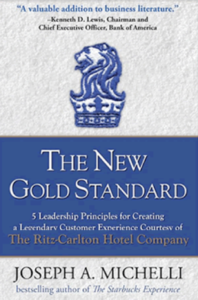
In a book every lawyer should read: The New Gold Standard: 5 Leadership Principles for Creating a Legendary Customer Experience Courtesy of the Ritz-Carlton Hotel Company the author writes:

In the culture Ritz Carlton, which emphasizes Service Values like ‘I am empowered to create unique, memorable, and personal experiences for our guests’ and ‘I own an immediately resolve guest problems,’ the choice to shift responsibility to someone else is not an option.

When I was coaching Canadian lawyers,  I stayed at a hotel in Calgary. When I checked in I was given two breakfast certificates. I knew I would not be able to use the second one because I had to be at the airport before the restaurant opened and I would be eating breakfast on the flight. So, as an experiment, I asked the front desk clerk if I could possibly apply the amount of the breakfast certificate (about $12) to my dinner at the same restaurant.

She looked at me and said:

“I am sorry Mr. Parvin, these are breakfast certificates and can only be used for breakfast.”

Now, I was just trying an experiment to see what the response would be. It wasn’t really a big deal for me or the hotel. After all it was only $12. But, it pointed to one of the reasons Ritz Carlton shines. and other hotels do not.

At a Ritz Carlton hotel the person at the front desk would have had the authority to do something. She might say:

“We can’t let you use the certificate towards dinner, but how would you feel if we upgraded your room?”

Here is the sad thing: I believe if you asked clients which of these two experiences would best describe their experience working with your law firm, the majority, and perhaps the vast majority, would say my experience in Calgary is closer to the experience they have with their law firms.

I wonder what would happen to profits per partner at a law firm that matched Ritz Carlton’s approach to hiring, training and empowering their lawyers and staff?

How many times have you been told that to differentiate your firm you need to “add value?”

Have you ever asked your clients for suggestions on ways you can add value?

When I practiced law, I did. I asked: “What is most effective way we can, at our expense, invest in our relationship with you?”

Here is what they told me. I want you to think about whether your clients would respond differently in 2020.

thumbs up business.jpgGC Client 1: Provide memos explaining new court cases/laws/regulations that would affect our business.

GC Client 2: Don’t charge for learning about our company.

GC Client 3: Willingness to help train, share forms and answer simple questions without opening a file and recording time.

GC Client 4: Meet with us at your expense and find out what we need.

GC Client 5:  Coming back after completion of a project and sharing with us any lessons learned and asking for our feedback.

I do not think there is anything unexpected in these responses. I received these answers over 15 years ago. My question for you is: Are the answers still valid in 2020?

I’ve known lawyers who sometimes make assumptions before reading an entire document or hearing their client’s entire story. In The Trusted Advisor, authors  David H. Maister, Charles H Green and Robert M. Galford  end their discussion of the art of listening with a story.

In a criminal trial, the defense lawyer is cross examining a pathologist. Here is what happened:
Attorney: Before you signed death certificate had you taken pulse?
Coroner: No
Attorney: Did you listen to the heart?
Coroner: No.
Attorney: Did you check for breathing?
Coroner: No.
Attorney: So, when you signed death certificate, you weren’t really sure the man was dead, were you?
Coroner: Well, let me put it this way. The man’s brain was sitting in a jar on my desk. But, I guess it’s possible he could be out there practicing law somewhere.
How many times have you made an assumption without reading an entire document, or before your client finished telling you the story? I know I have done it. Like many of you, I wanted my client to  know how how smart and experienced I was, having handled another matter just like the one he was describing. Next time you are tempted to do it, slow down and think about the lawyer cross-examining the coroner in the story..

What do novels written, baseball games played and commercials produced 40-50 years ago, and more, have to do with what experienced lawyers should know about blogging? It turns out there is a lot senior lawyers can learn.

During the pandemic this year I am reading and listening to more novels than ever before. As an experiment I decided to download novels written by well known authors including John Updike, Robert Caro, John Steinbeck and others. Many of the books I read years ago and remembered enjoying them.

What have I discovered? It is difficult to read or listen to the end. They move too slowly for me know. There is too much description or back story.

When I grew up I played baseball through my sophomore year in college. I regularly watched the Cubs and White Sox on WGN in Chicago with Jack Brickhouse announcing. In 2020 I didn’t watch one game even a World Series game. Why? I get bored watching because it moves too slowly.

When I grew up TV commercials were 60 seconds, later 30 seconds and now most commercials are 15 seconds? Why? Because those who write and produces commercials know viewers will not sit through 60 seconds or even 30 seconds.

A few years ago I was asked by a national law firm to do programs in several of their offices  across the country on blogging for experienced lawyers. The firm asked me because I was an experienced lawyer myself, and they thought older lawyers might find me more credible. I sought to convince experienced lawyers that they are prime candidates to blog for client development.

When I presented my thoughts on blogging, I told them rule number 1 is they cannot bore their readers. I then explained how to avoid that problem:

  • You have to pick a topic your clients and potential clients care about
  • You have to write the blog post in a way they will want to read it. Don’t bury the lead. The headline and first sentence must capture the readers’ attention.
  • You should find every way possible to get what you have written in the hands of as many clients, potential clients and referral sources as will value having the materials. Do not “push” your blog to them. Instead, “pull” those interested to it.

Social media, among other things is a distribution tool that allows you to broaden who reads your materials by “pulling” them to it.